
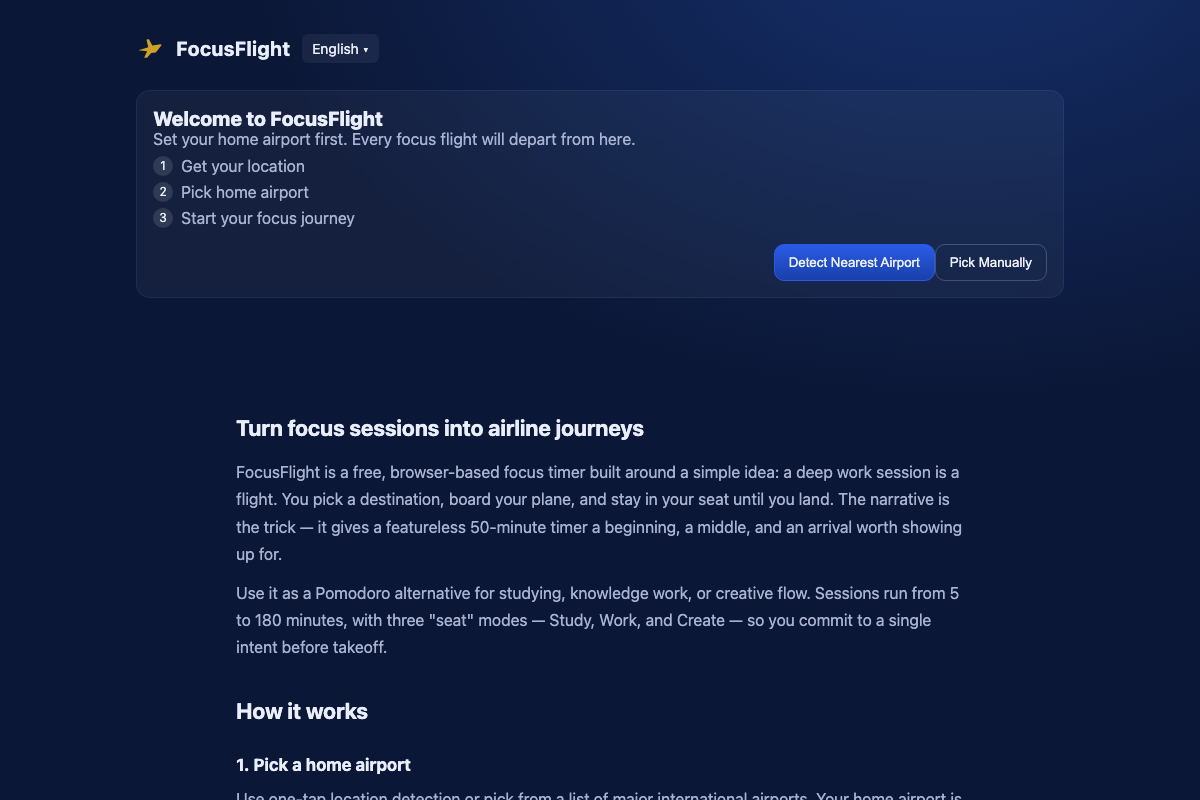
The Pomodoro method is often presented as a simple timing rule: work for 25 minutes, take a short break, repeat a few times, then step away for a longer reset. That structure is useful because it lowers the pressure of starting. You do not need to promise yourself four perfect hours. You only need to begin one defined block. But many people discover that a timer alone does not solve the real problem. The clock is running, yet their attention still breaks on hallway noise, phone buzzes, open tabs, and the constant temptation to switch tasks the moment work feels slightly difficult.
That is where white noise can become more than background filler. A steady sound layer gives your focus session an acoustic boundary. Instead of hearing every passing car, chair scrape, and conversation fragment, you create a more stable environment that makes interruptions less noticeable. White noise is not a substitute for clear priorities or good sleep, but it can remove enough friction that the Pomodoro method starts working the way people hope it will. When the room feels calmer, the 25-minute block becomes easier to protect.
For FocusFlight users, this combination matters because focus improves when structure and environment support each other. The timer defines the work period. The ambient sound reduces distraction. The session gains a beginning, an end, and a more predictable mental space in between. If you already use a focus timer, explore study timer techniques, or compare white noise with other sound profiles, the next practical step is learning how to combine them into one repeatable routine.
Why the Pomodoro Method Still Fails for Many People
The promise of Pomodoro is attractive because it sounds manageable. Work for one short interval. Break. Repeat. Yet plenty of students, remote workers, and creators still end a Pomodoro block having done almost nothing important. Usually the problem is not the timer itself. The problem is that a timer only manages duration. It does not automatically manage attention.
Imagine sitting down to read, write, code, or revise. You start a 25-minute block, but the apartment building is noisy, someone nearby is talking, your heating system clicks on and off, and your brain keeps waiting for the next interruption. In that situation, the timer becomes a witness to distraction rather than a tool for concentration. A well-designed focus session needs more than a countdown. It needs conditions that make staying with one task easier than abandoning it.
Sophie Leroy's attention-residue research describes how thoughts about a previous task can interfere with a subsequent one. Plan fewer avoidable switches, but do not assume every interruption has the same recovery cost or that background audio prevents it.
What White Noise Actually Helps With
White noise spreads sound energy evenly across frequencies, which gives it a consistent hiss-like quality. That description sounds technical, but the everyday effect is straightforward: it masks irregular environmental noise. A slammed door still exists, but it stands out less. Nearby chatter still happens, but it feels more distant. The room becomes less acoustically dramatic.
This matters because the brain is highly responsive to novelty. Sudden, inconsistent sounds trigger an orienting response. Even if you do not fully stop working, part of your attention has already shifted. A stable sound bed reduces how often that happens. The goal is not to make your environment silent. The goal is to make it predictable enough that your brain stops scanning for every change.
The CDC's NIOSH guidance on noise focuses on safety, not productivity, but it still reinforces an important principle: sound quality and sound level matter. For focus work, white noise should be noticeable enough to mask distractions but not so loud that it becomes tiring or competes with the task. A gentle, steady layer is usually better than turning the volume high and hoping brute force will fix a chaotic room.
Why White Noise and Pomodoro Work Well Together
The Pomodoro method works best when the session boundary feels real. You want a clear signal that the next 25 minutes are different from the previous 25. White noise strengthens that signal because it changes the environment at the same moment the timer begins. Instead of merely deciding to focus, you enter a different sensory state. That shift may sound small, but ritual matters. Consistent cues reduce the activation energy of starting.
There is also a practical fit between white noise and short work intervals. White noise is especially effective when you need quick distraction control without making the setup elaborate. You do not need to build a playlist, choose lyrics-free tracks, or find the perfect atmospheric mood. You press start, the timer begins, the sound covers the room, and you get to work. The simplicity matches the original appeal of Pomodoro.
For many people, the best use case is not heroic deep work but repeatable medium-intensity concentration. White noise plus a timer is excellent for reading assigned chapters, writing a draft section, clearing inbox backlogs, reviewing notes, solving practice problems, editing a document, or handling admin tasks that would otherwise get stretched across an entire afternoon. If you want the original framing of the method, the official Pomodoro Technique overview is still worth reading.
When to Use 25, 50, or 90 Minutes Instead
Pomodoro is often treated as synonymous with 25 minutes, but the real principle is interval-based focus. The best interval depends on task type, mental energy, and experience level. If you are easily distracted or building the habit from scratch, 25 minutes is a good default. It is short enough to feel safe and long enough to create momentum.
Once you become more stable, 50-minute blocks often outperform classic Pomodoro for demanding study and knowledge work. You still get a defined finish line, but you allow more time for immersion. For truly deep work such as drafting, complex analysis, or concept-heavy learning, some people prefer 75- to 90-minute blocks because that better matches how long it takes to fully settle into hard thinking.
White noise can support all three formats, but each interval changes what you should optimize. In a 25-minute block, the sound's main job is rapid masking and easier task initiation. In a 50-minute block, comfort matters more because you have to tolerate the sound longer. In a 90-minute block, the biggest question is whether white noise still feels supportive or whether something softer, like pink noise, brown noise, or airplane ambience, would be easier to live inside for extended concentration.
| Session Type | Best Use | Recommended Sound Strategy | Main Benefit | Main Risk |
|---|---|---|---|---|
| 25/5 Pomodoro | Starting tasks, light study, admin, review | White noise at moderate volume | Fast setup and strong distraction masking | Can feel abrupt if the task needs longer immersion |
| 50/10 Focus Block | Essay drafting, revision, coding, analysis | White noise or airplane ambience | More room for momentum | Poor task definition can waste a longer block |
| 90/15 Deep Work Block | Complex problem solving, writing, strategic work | Softer ambient audio or brown noise if white noise feels sharp | Maximum continuity | Too ambitious when tired or under-slept |
How to Build a White-Noise Pomodoro Routine
A good routine begins before the timer. First, define one task small enough to complete or meaningfully advance within the next block. "Study chemistry" is too vague. "Answer 12 reaction-rate practice questions" is workable. "Draft the introduction and first example paragraph" is workable. Clarity matters because ambiguity invites distraction.
Second, prepare the environment. Put the phone out of reach, close nonessential tabs, and decide what you will need before you start. The point is to reduce mid-session negotiation. Every small decision inside the block is a chance to drift.
Third, start the sound and timer together. If you are using FocusFlight, this pairing is built into the experience. If not, start your white-noise source at the same moment you begin the interval. Repetition is useful here. When the same sensory cues appear at the start of every work block, your brain learns the pattern faster.
Fourth, keep the break clean. A five-minute break is not a small entertainment binge. Stand up, stretch, drink water, or walk. If you open a high-stimulation app, you make re-entry harder. Breaks should restore attention, not scatter it.
Fifth, review after three or four blocks. Ask whether the sound helped you ignore external distraction, whether the block length matched the task, and whether the routine felt sustainable. Improvement usually comes from these small adjustments rather than from replacing the system entirely.
Common Mistakes That Make the Method Weaker
The first mistake is using white noise without fixing obvious distractions. If your phone is on the desk lighting up every few minutes, no background sound will rescue the session. White noise is support, not magic.
The second mistake is choosing a task that is too large or too undefined. A vague task creates anxiety, and anxiety fuels avoidance. Pomodoro works because it shrinks the psychological size of work. Keep that advantage by making the task concrete.
The third mistake is playing white noise too loudly. Louder is not always better. If the sound becomes the dominant sensory object, it will create fatigue. The best volume is usually just high enough that nearby irregular sounds lose their edge.
The fourth mistake is assuming every task should use the same interval. Reading one difficult paper, answering support emails, and outlining a presentation do not place the same demands on attention. Match the block length to the work rather than treating 25 minutes as a law.
The fifth mistake is judging the routine after one bad session. Sleep, stress, hunger, and task difficulty all affect performance. Test any focus setup over several sessions before deciding whether it works.
White Noise vs Music for Pomodoro Sessions
Many people reach for music by default, but music changes the task in ways that are easy to underestimate. Lyrics compete with language-heavy work. Dynamic songs create mood shifts that may pull attention outward. Even instrumental playlists can encourage skipping, adjusting, and searching for the next perfect track.
White noise avoids most of those problems because it is intentionally plain. It does not ask to be interpreted. It simply creates a more consistent background. That makes it especially useful for reading, writing, studying, and any task where language processing matters.
Music still has a place. Repetitive, familiar instrumental music can work well for exercise, routine admin, or design tasks where a stronger emotional tone is helpful. But if your goal is to make Pomodoro blocks more reliable across many different task types, white noise is often the simpler and more dependable default.
How Students Can Use This During Exam Prep
Exam preparation is where this combination becomes especially practical. Long revision days fall apart because students ask too much of willpower. They sit down intending to study for hours, then spend half that time transitioning, reorganizing materials, checking messages, and recovering from interruptions. A white-noise Pomodoro routine breaks the day into manageable flights.
Use the first block for the hardest material while your energy is highest. Follow with a short break, then either repeat the same subject or switch to a complementary one. After three or four blocks, take a longer reset and review what you actually completed. This is important. The routine should produce visible progress, not just the feeling of being busy.
If 25-minute blocks feel too short for problem solving or essay planning, move to 50 minutes. The method is still working as intended as long as the block has a clear boundary and the breaks are deliberate. What matters is not loyalty to a number. What matters is protecting attention long enough to make meaningful progress.
How FocusFlight Can Simplify the Setup
One reason people abandon otherwise good productivity systems is setup friction. They need a timer, then a sound app, then a playlist, then a decision about session length, then another decision about whether they chose correctly. By the time the work starts, motivation has already dropped.
FocusFlight reduces that friction by combining timing, atmosphere, and ritual into one place. Instead of assembling a focus environment from separate tools, you begin a session that already feels bounded and intentional. The flight framing helps too. A session has takeoff, cruising, and landing. That shape encourages follow-through.
If you like white noise specifically, use it when you need sharper masking. If you want something more immersive for longer blocks, the airplane ambience built into FocusFlight may feel more natural over time. The important part is keeping the routine simple enough that you will actually use it tomorrow, not just admire it as a productivity theory.
Frequently Asked Questions
Is white noise good for Pomodoro sessions?
Yes, especially when the main problem is environmental distraction. White noise helps mask irregular sounds so each Pomodoro block feels more stable and easier to protect from interruption.
Should I use 25-minute Pomodoros or longer focus blocks?
Use 25 minutes if starting is the hardest part or if your attention is fragile. Move to 50 minutes when you can stay engaged longer and the task benefits from more uninterrupted time. Use 75 to 90 minutes for deeper work only after shorter blocks feel reliable.
Is white noise better than music for studying?
For reading, writing, memorization, and problem solving, white noise is often better because it does not contain lyrics or dramatic changes. Music can still work for some routine tasks, but it usually adds more variability.
How loud should white noise be while working?
Keep it at a moderate volume, high enough to soften distractions but low enough to fade into the background. If you notice the sound as often as the task, it is probably too loud.
Can I use FocusFlight instead of a separate white-noise app?
Yes. Many users prefer an integrated timer and ambient environment because it removes setup friction. If the built-in airplane ambience feels better than plain white noise over long sessions, use that instead. The best setup is the one you can repeat consistently.
The best focus routine is rarely the most complicated one. It is the one that reduces the number of decisions between intention and action. A timer gives your work shape. White noise gives the room steadiness. Together they make it easier to begin, easier to continue, and easier to come back for the next round. That is what most productivity systems are really trying to achieve.